Imagine you run a development program for 20 new managers from sales, operations and R&D. The managers have never worked together as a group, so a team assessment would have nothing to measure. Daniel runs a customer support team, and he usually finds out that his team missed a deadline when a customer complains. Samuel runs an engineering group, and he raises every problem at the first meeting after he spots it.
The pattern has held since Daniel and Samuel were promoted last year, and the usual explanation is that Daniel is too soft and Samuel is too blunt. The profile gives you a different explanation.
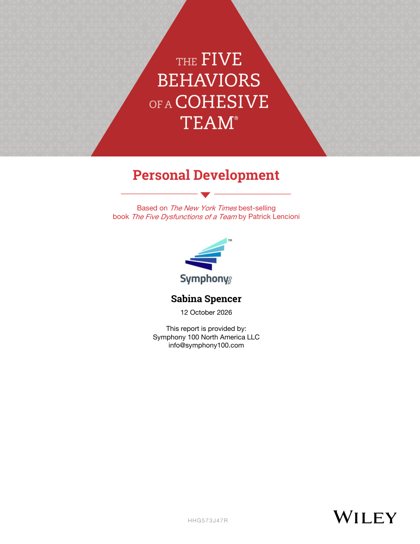
Daniel's profile places him near the Keeps the peace end of the accountability scale: calling out problems runs counter to his wish to keep relationships warm. Samuel's profile places him at the Addresses problems end of the same scale: Samuel is more willing to call out problems. On the scale for how he gives feedback, Samuel's profile places him near the Sticks to logic end: he stays objective and focused on facts. Neither position is wrong, because every position on a scale has a strength and a cost to the team.

What Daniel sees in his profile
Daniel reads that he may let problems slide or soft-pedal feedback rather than risk dampening someone's spirit, and that failing to call out problems denies his teammates the opportunity to address concerns early on. The summary page says he might excel at using encouragement to help teammates meet expectations, and might struggle with speaking up about a teammate's poor behavior or performance. One of the habits the profile gives Daniel is to use his encouraging side to put positive pressure on a teammate to improve.

What the program owner sees in a Comparison Report
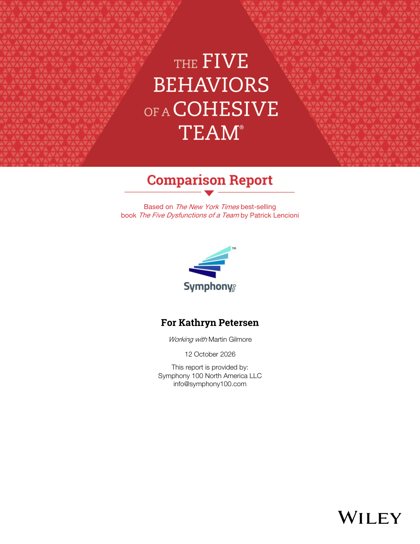
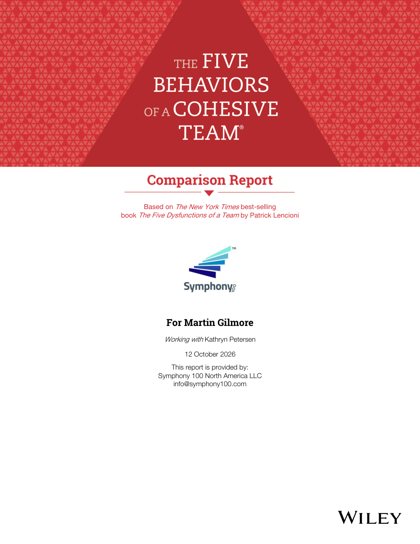
Daniel's support team hands its hardest cases to Samuel's engineers, so each manager receives a Comparison Report on working with the other. Each report plots both managers on the same two scales for each behavior, including the scale from Keeps the peace to Addresses problems, and describes how each of them tends to act. The report's section on each behavior closes with questions for the pair to discuss, such as how Samuel can best raise a problem that involves Daniel.









 See a sample
 See a sample
 $395 per session
 $210 per team member
 START HERE