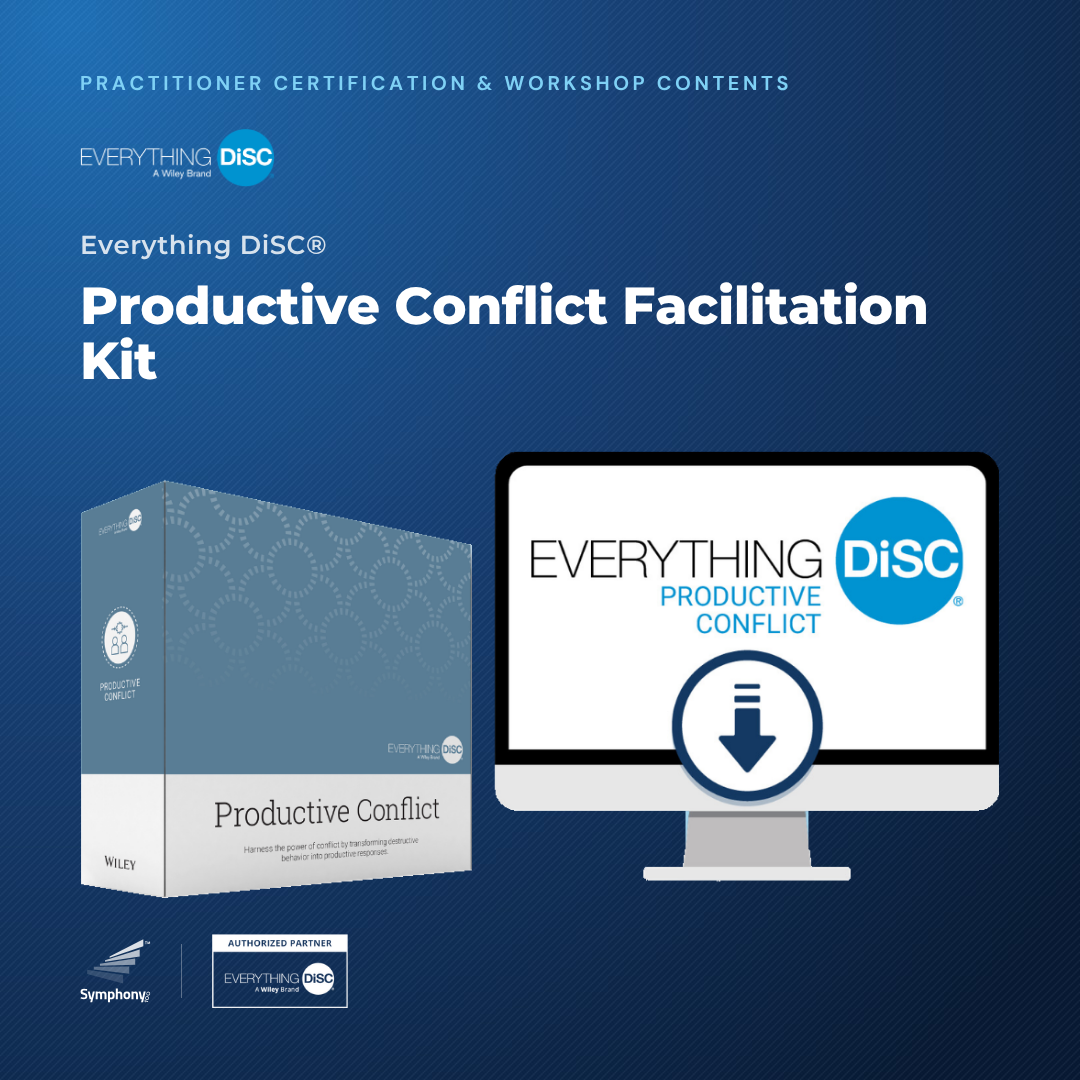
Conflict is not the problem; the automatic response to it is. Productive Conflict pairs the DiSC® model with cognitive-behavioral technique so a learner can catch their destructive habit in the moment and choose a different one. It is bought as its own assessment and delivered as a standalone profile.
The same argument keeps happening in the same shape. One person goes quiet and withdraws support later; another escalates and wins the exchange while losing the relationship. Everyone knows the pattern and nobody has a way to interrupt it.
What the learner walks away with
Their destructive responses named specifically, the thoughts that trigger them, and a rewrite — a different thought and a different move, practiced before they need it.
Where it lands
Teams carrying unresolved history, cross-functional groups that keep colliding, and organizations where a restructure has put people with different instincts in the same room.
Names the habit
Destructive responses are identified by style, in language specific enough that people recognize themselves.
Own responses mapped
How they read to others
What they cost the group
Rewrites the thought
Cognitive-behavioral technique applied to the moment before the reaction, which is where change is actually possible.
Triggers identified
Reframes that hold under pressure
Practice built into the session
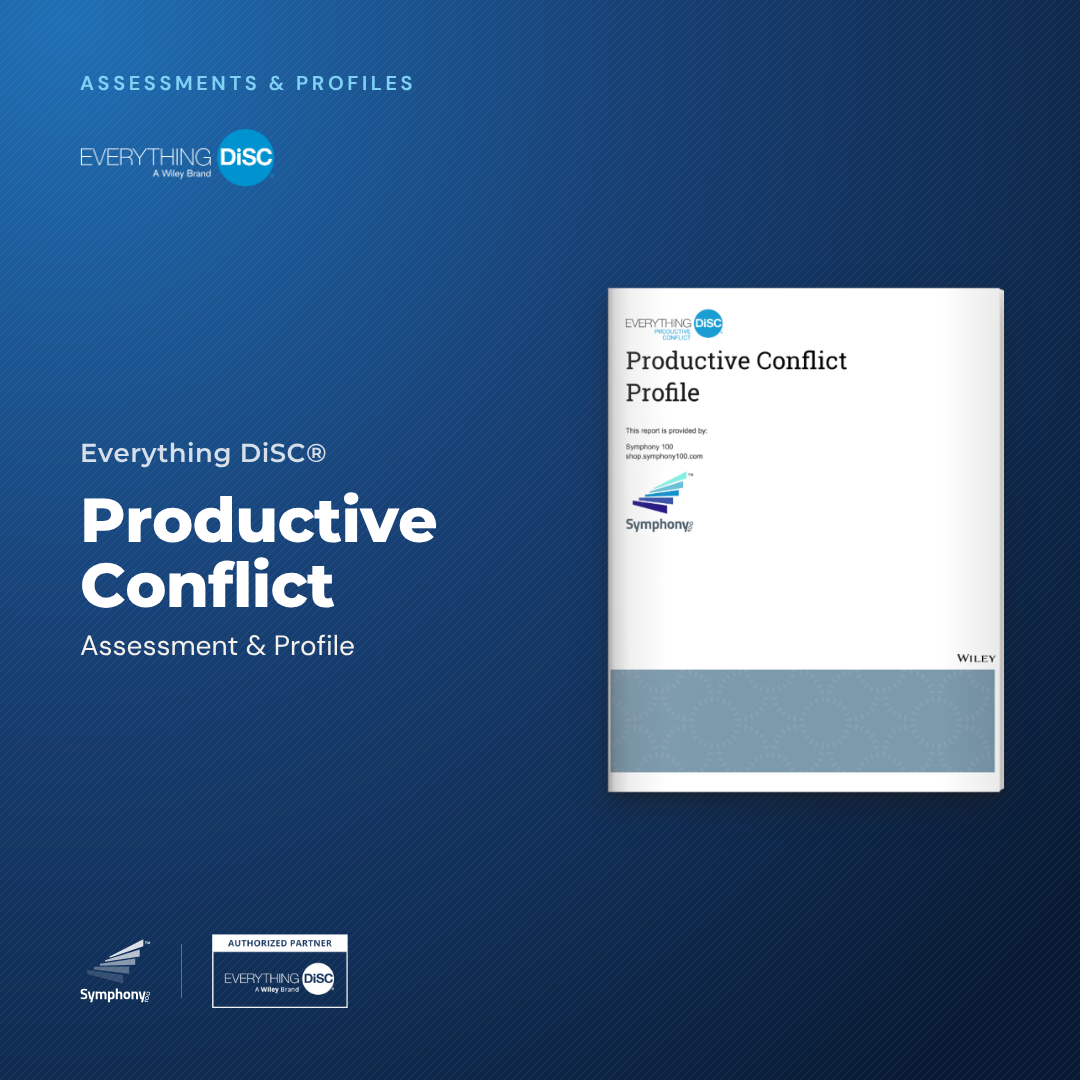
Standalone profile
Bought as its own assessment and delivered as a report — the right call when conflict is the specific need rather than the foundation.
Its own assessment
Delivered as a profile
Works alongside Workplace®
In the room
The profile is the input. The session is where it becomes useful.
How a Productive Conflict program usually runs
This one needs a facilitator more than most. The content asks people to describe their own worst moments, and that conversation does not happen safely without someone holding the room.
It is often bought after a specific incident rather than as part of a development calendar, which makes the facilitation kit and the group reports the pieces that matter.
6 products · priced per learner; a standalone assessment, not a Catalyst™ experience
Turns the instinctive response to tension into a deliberate one: names the destructive habit, then rebuilds it. DiSC® methodology plus cognitive-behavioral technique.
A team's DiSC® styles side by side — culture, priorities, and blind spots at a glance. Included with an active Catalyst™ Practitioner Experience; otherwise charged per report.
The session leader's view of the group: each participant's style, the culture it adds up to, and where the conversation will need care. Included with an active Catalyst™ Practitioner Experience; otherwise charged per report.
For programs that touch multiple teams, sites, or products: sequencing, measurement, and the renewal case — shaped to your goals on a scoping conversation, never off a shelf.
Symphony 100 is an independent authorized partner of Everything DiSC® and The Five Behaviors®, and is not affiliated with Wiley. Everything DiSC® and The Five Behaviors® are development tools, never hiring or selection tools.
 Authorized Partner