Emotional agility, taught as a practice rather than a trait. Agile EQ™ shows a learner the response they reach for automatically, the situations where it stops serving them, and how to stretch to the one the moment actually needs. It builds on the Workplace® foundation.
Someone has one gear and uses it everywhere. The person who pushes hard pushes hard in the moment that needed patience; the person who smooths things over smooths over the moment that needed a decision. The instinct that made them good is the instinct costing them the room.
What the learner walks away with
Their own mindsets — the ones that come easily and the ones that take effort — and specific practice for reaching the harder ones. The feedback is written as narrative, so it reads as recognition rather than diagnosis.
Where it lands
Teams under sustained pressure, people newly responsible for others, and any group where the same interpersonal pattern keeps producing the same outcome.
Mindsets, not labels
The profile works in mindsets a person can step into, which makes the development concrete rather than aspirational.
Comfort zone named precisely
The stretch identified per mindset
Practice tied to real situations
Narrative feedback
Written as a story about how this person meets the world, which is what makes it land in a session rather than sit unread.
Personal rather than generic
Strengths and costs of each
Actionable in the same week
Layers onto Workplace®
Agile EQ™ assumes the Workplace® foundation. On Catalyst™ both come from the same assessment.
No second assessment
Add-on available for existing profile holders
Same learner account
In the room
The profile is the input. The session is where it becomes useful.
How an Agile EQ™ program usually runs
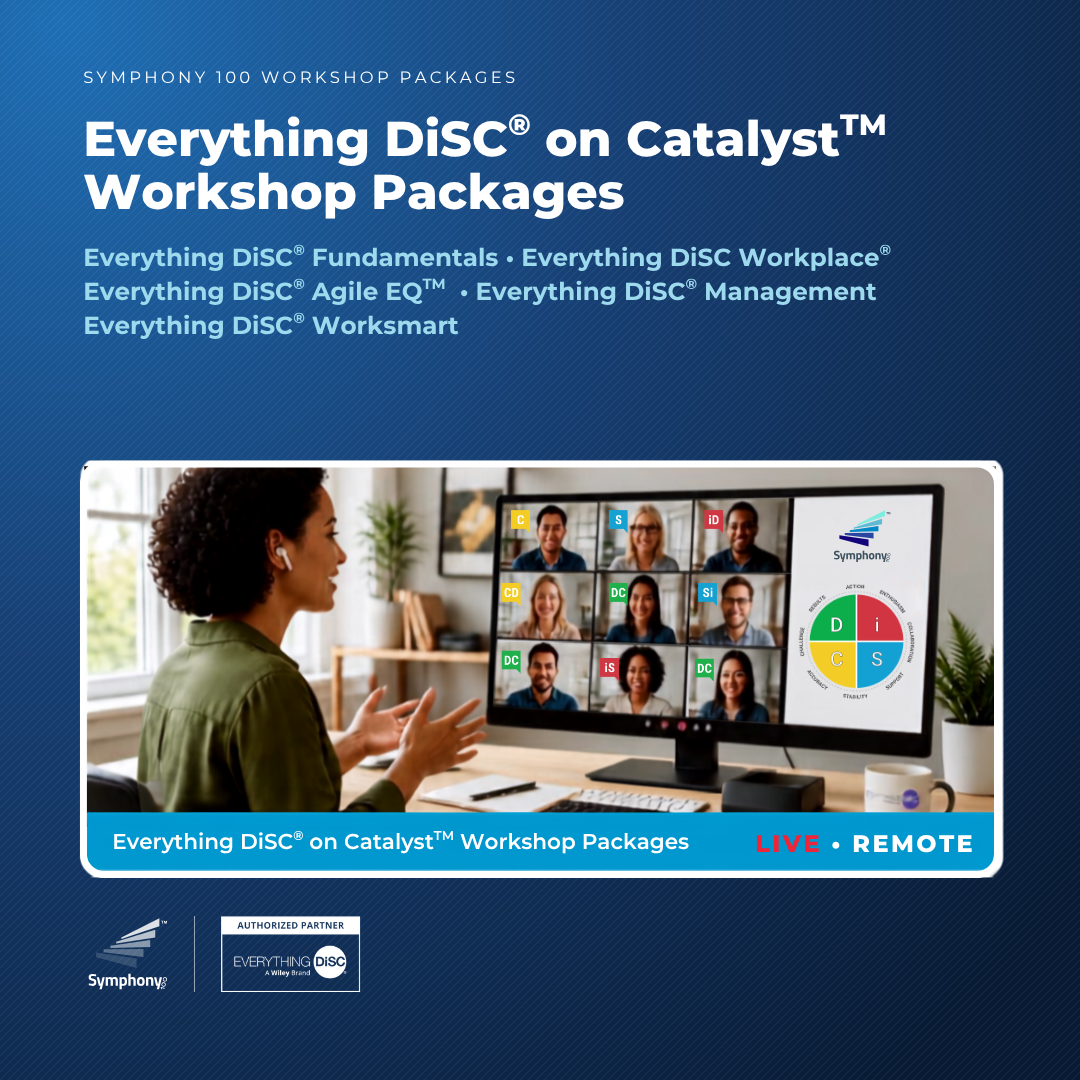
Agile EQ™ rewards a facilitated room more than most of the catalog, because the work is practicing responses that do not come naturally — and that is hard to do alone with a document.
Organizations that already have Workplace® profiles in place often add Agile EQ™ to the same learners rather than running a new population, which is what the add-on product is for.
7 products · priced per learner; the add-on needs an existing Catalyst™ profile
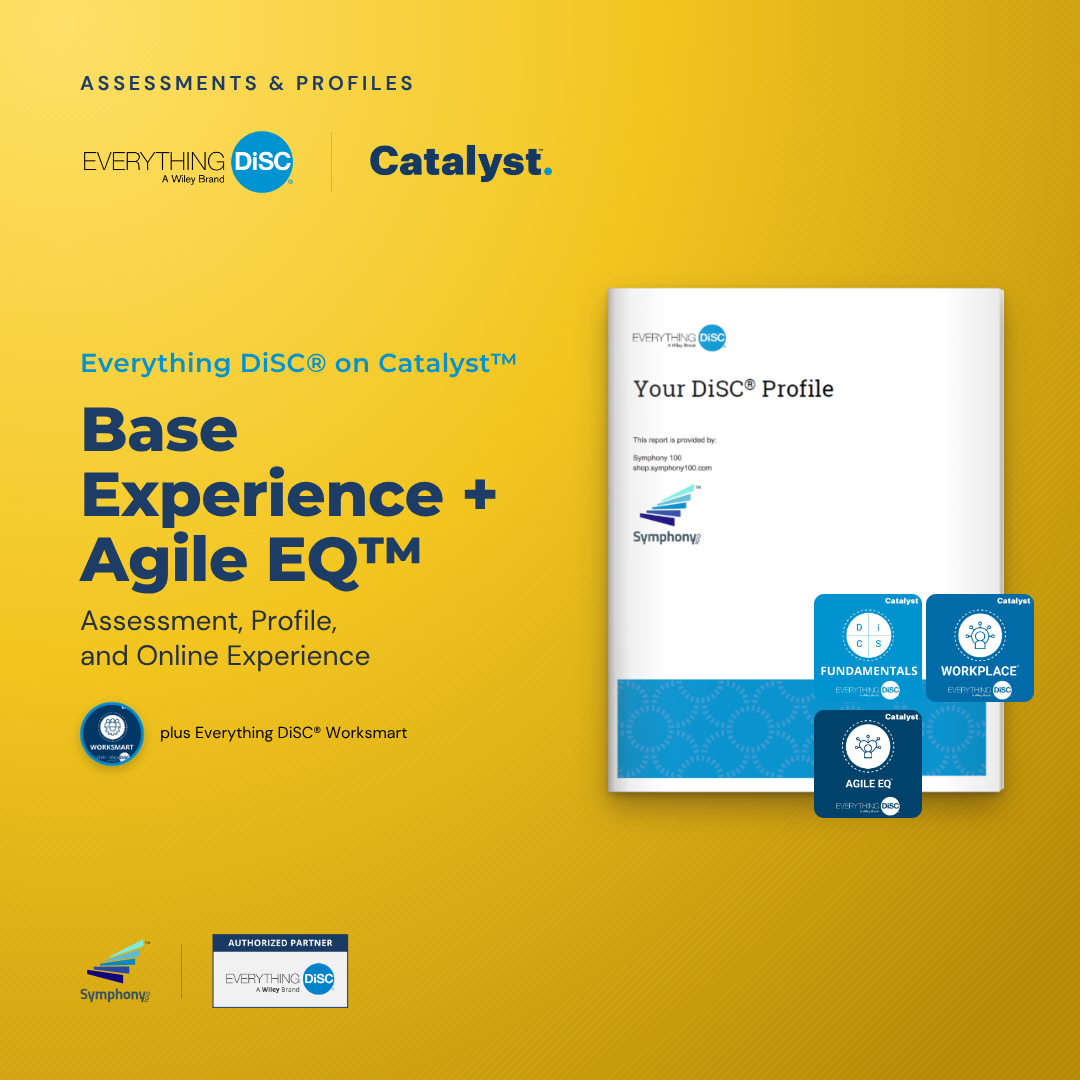
Everything in the Base Experience, plus emotional agility: recognizing when a go-to response no longer serves, and practicing the shift the situation needs.
A team's DiSC® styles side by side — culture, priorities, and blind spots at a glance. Included with an active Catalyst™ Practitioner Experience; otherwise charged per report.
The session leader's view of the group: each participant's style, the culture it adds up to, and where the conversation will need care. Included with an active Catalyst™ Practitioner Experience; otherwise charged per report.
Symphony 100 is an independent authorized partner of Everything DiSC® and The Five Behaviors®, and is not affiliated with Wiley. Everything DiSC® and The Five Behaviors® are development tools, never hiring or selection tools.


 Authorized Partner