
 Authorized Partner
TEAM DEVELOPMENT
The Five Behaviors® Team Development Assessment & Profile
For one intact, ongoing team that has worked together for a while. Looks at the team's collective behavior on all five behaviors.
$210 per team member
THE FIVE BEHAVIORS® PERSONAL DEVELOPMENT
START HERE
The Five Behaviors® Personal Development is the result of a partnership between Wiley and best-selling author Patrick Lencioni. The program teaches individuals to become better teammates, using the model from Lencioni's book The Five Dysfunctions of a Team. Each participant completes a short online assessment and receives a 23-page profile on how that participant personally builds or blocks teamwork.
The profile is about the person, not one team. Participants do not need to work together, so the profile fits mixed groups, new managers, new hires and anyone who is not part of an intact, ongoing team.
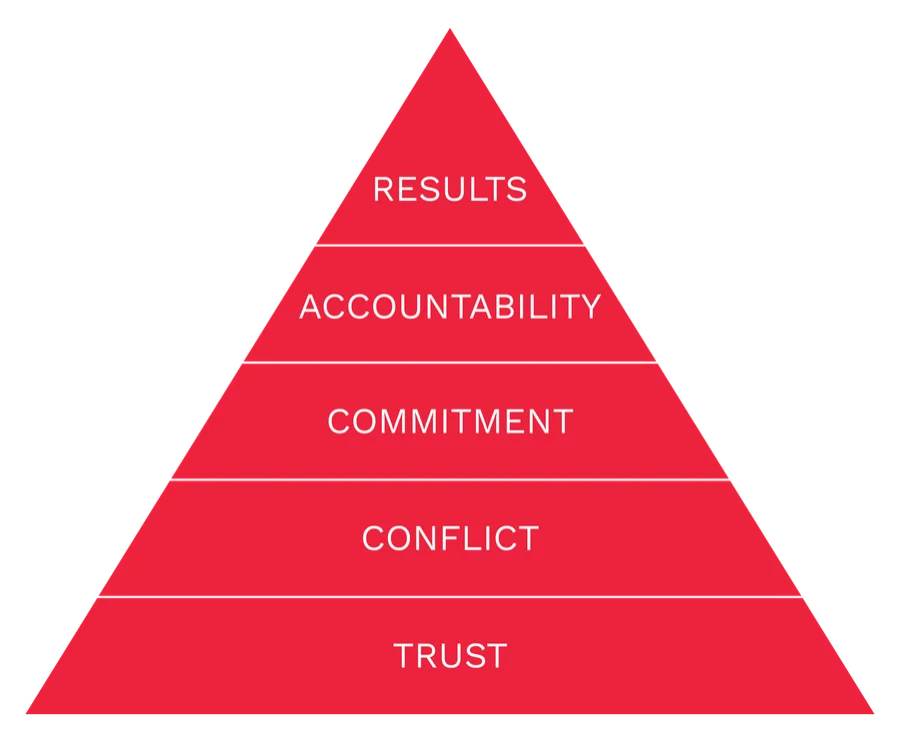
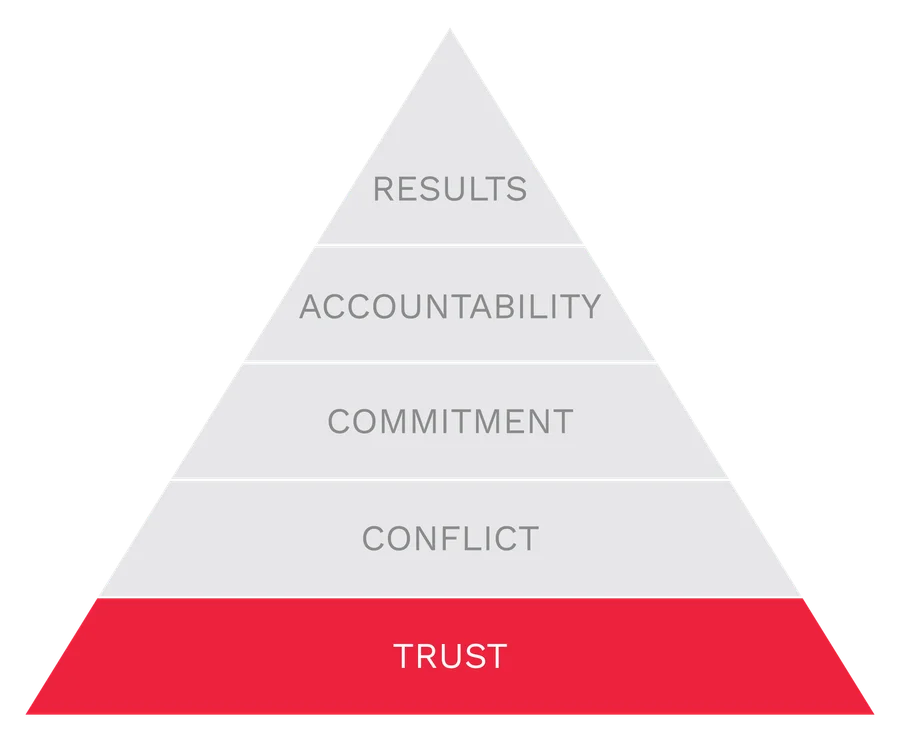
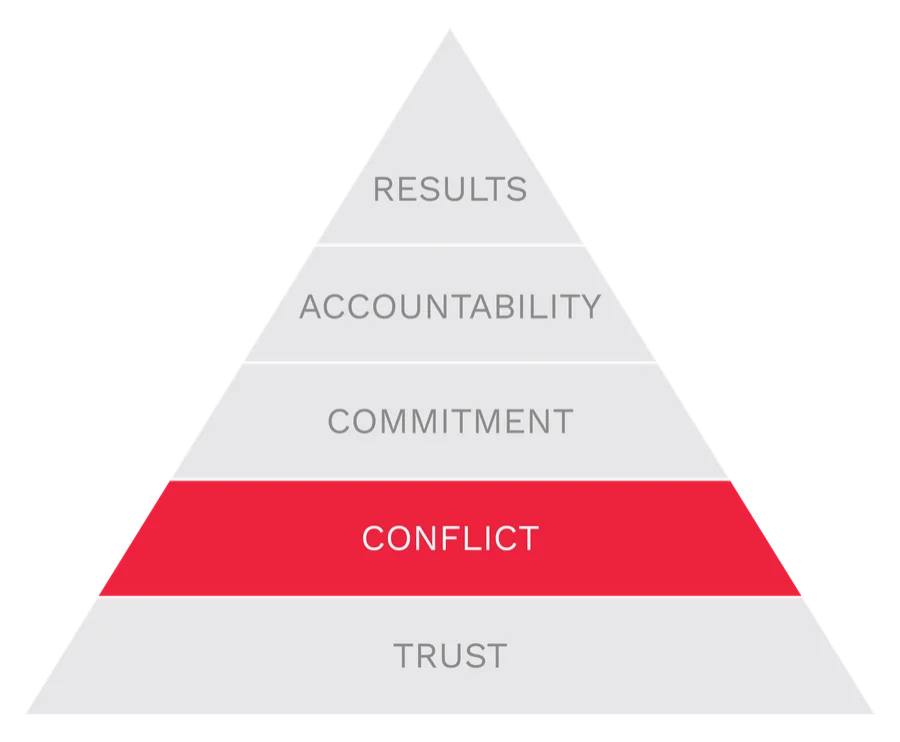
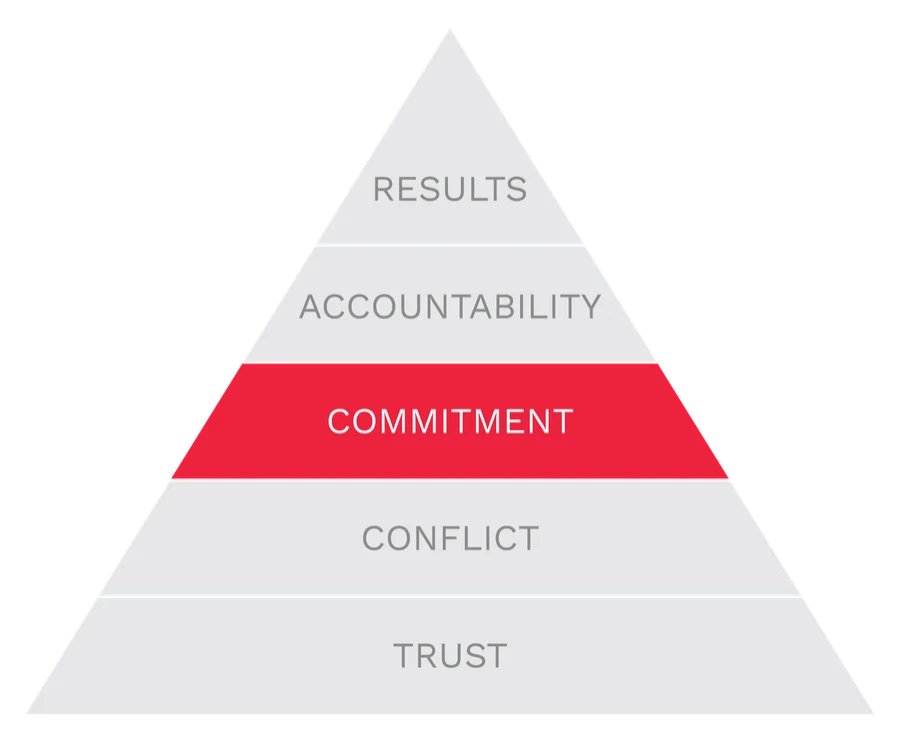
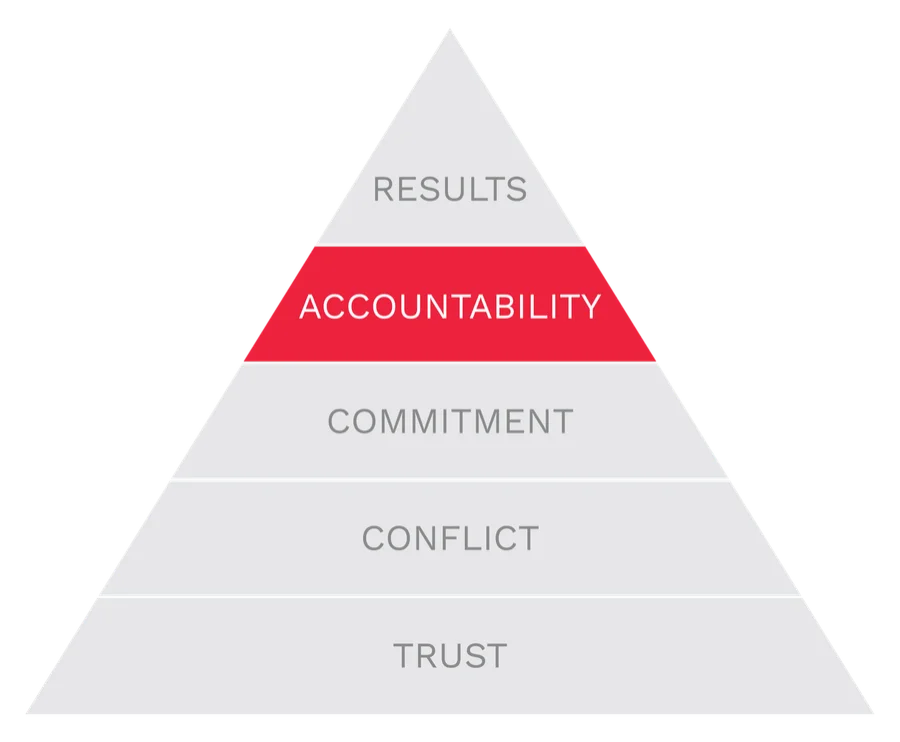
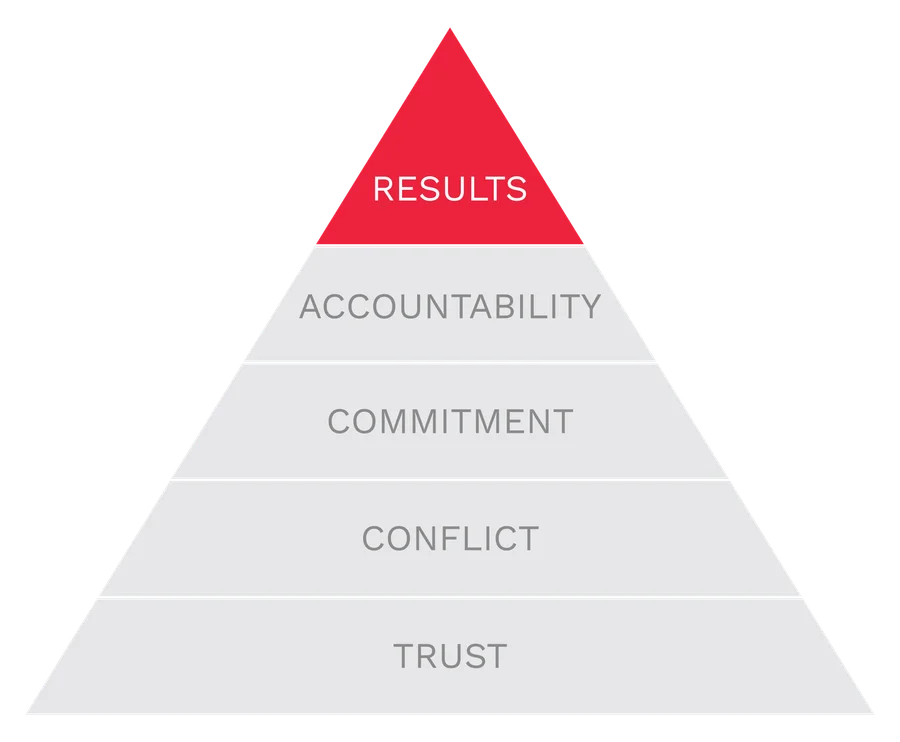
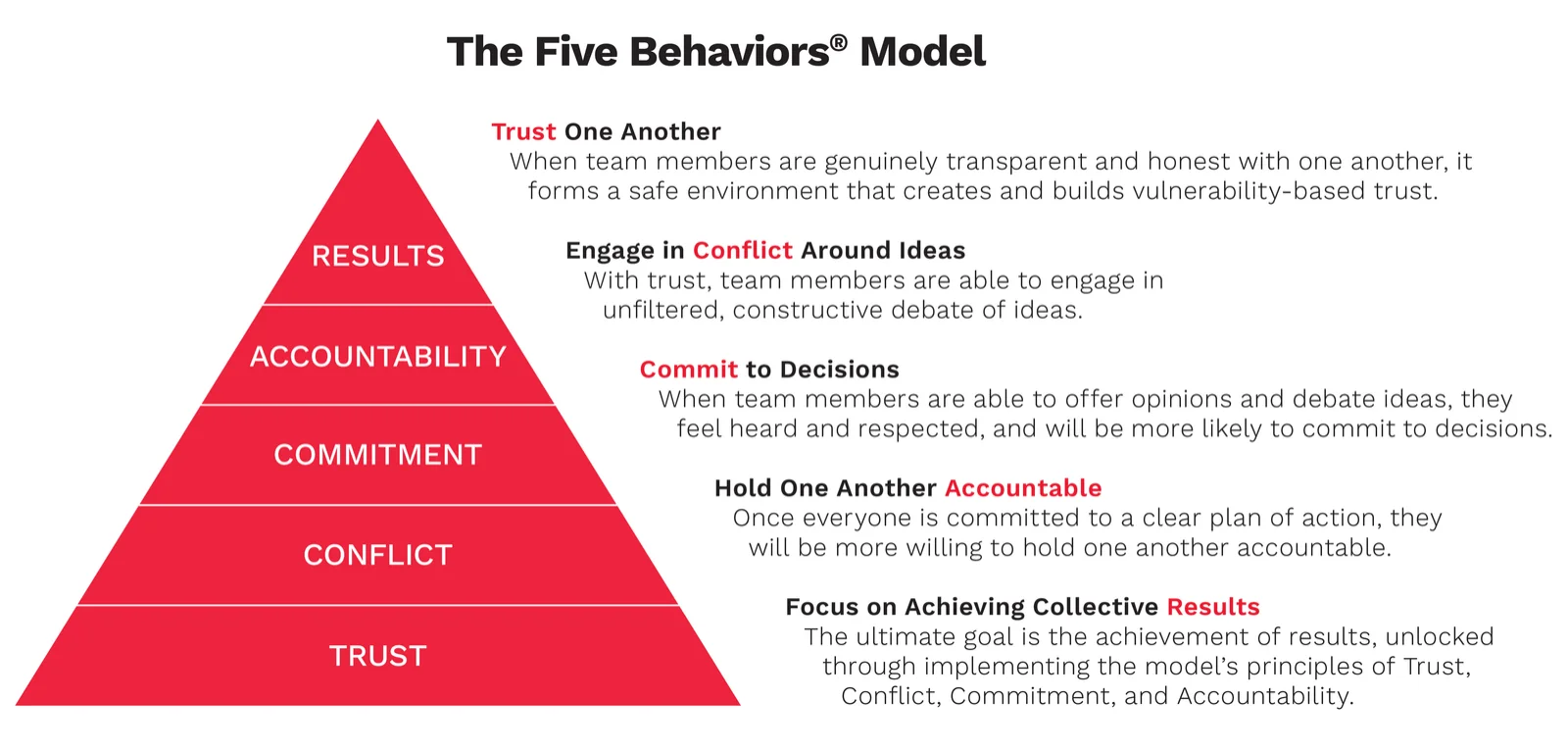
Each behavior is the foundation for the next one, and the profile gives each behavior its own chapter. Choose a level, or build the model from the base up.
The Five Behaviors® model. Graphics: Wiley.
WATCH
An overview of The Five Behaviors® model: trust, conflict, commitment, accountability, and results, and how teams work through them together.
WHY ORGANIZATIONS CHOOSE IT
Teams form, change and dissolve all the time: projects, squads, committees, reorganizations. When the teamwork investment sits with one team, the investment leaves when that team does. The Personal Development profile puts the investment in the person, so the skills travel to every team the person joins.
Each participant learns habits for trust, conflict, commitment, accountability and results that work on any team.
Every colleague who takes the profile learns the same five words, so teamwork becomes easier to talk about across departments.
The profile explains each behavior through the participant's own answers, with specific steps instead of general advice.
The profile closes with an action plan for tomorrow, two weeks and one month, written in the participant's own words.
“63% of respondents feel their job satisfaction would improve if their coworkers were better teammates.”
State of Teams Whitepaper, Wiley Workplace Learning Solutions, March 2024WHO IT IS FOR
Imagine the people you want to develop. If they do not all sit on one intact team, Personal Development is the right starting point.
 People who move between teams
Imagine you run a product group where engineers join a project squad for three months, then move to the next one. The profile builds the teammate, not the squad, so the skills travel to the next team.
 Mixed groups and new-manager cohorts
Imagine a program for 20 new managers from sales, operations and R&D. The managers have never worked together, so a team assessment would have nothing to measure. Each profile stays focused on the individual manager.
 Large, cross-functional and matrixed organizations
Imagine an engineer who reports to one manager, works daily with a product team, and sits on two working groups. The profile follows the person, not the org chart.
 Emerging leaders and new hires
Imagine a new hire who is excellent at the work but goes quiet in meetings and avoids disagreement. The profile names the habit and gives concrete steps to try in the next meeting.
 A whole department
Imagine a department of 25 people spread across several small teams. Everyone takes the profile, and every team in the department starts using the same five words.
 A first step before Team Development
Imagine your leadership teams will run Team Development next year. Starting individuals on Personal Development now means the teams arrive already speaking the language.
WHAT IS INSIDE
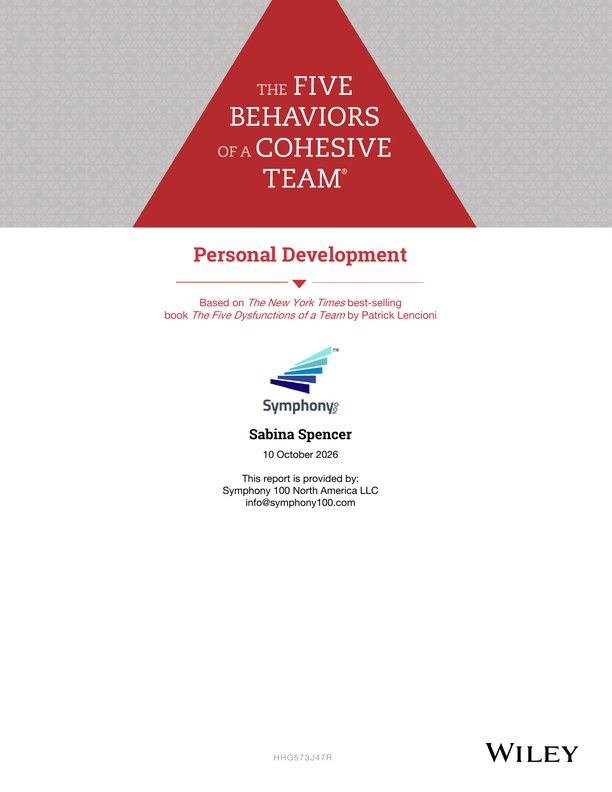 23 pages
The profile reads like a short coaching session on paper. The profile explains each concept with the participant's own answers, and every chapter ends with space for the participant to write how the participant will apply it at work.
TRY IT
In the Conflict and Accountability chapters, the profile places each participant on scales that make everyday habits visible. Slide each dot to where you think you naturally sit. There is no right answer: every position has a strength, and every position has a cost to the team.
How the participant naturally debates: jumping in with energy, or weighing in calmly once the participant has thought it through.
How the participant responds to other views: open to being persuaded, or holding firm to a position.
How the participant handles a teammate who falls short: protecting the relationship, or raising the issue directly.
How the participant frames feedback: with attention to how the other person feels, or with a focus on facts and logic.
A starting guess only. The assessment places each participant from the participant's own answers. Imagine a participant lands near "Keeps the peace." The profile does not treat the result as a flaw. The profile explains the strength behind the habit (protecting relationships), the cost to the team (problems that go unaddressed until they grow), and ways to raise an issue early without damaging the relationship.
THE ACTION PLAN
Reading about a habit does not change the habit. That is why the profile ends with a plan in three horizons. The participant chooses the habits and writes the steps in the participant's own words.
One small, visible step in the next meeting or conversation.
A habit practiced often enough that colleagues start to notice.
A habit that has become part of how the participant works on any team.
THE BOOK AND THE MODEL
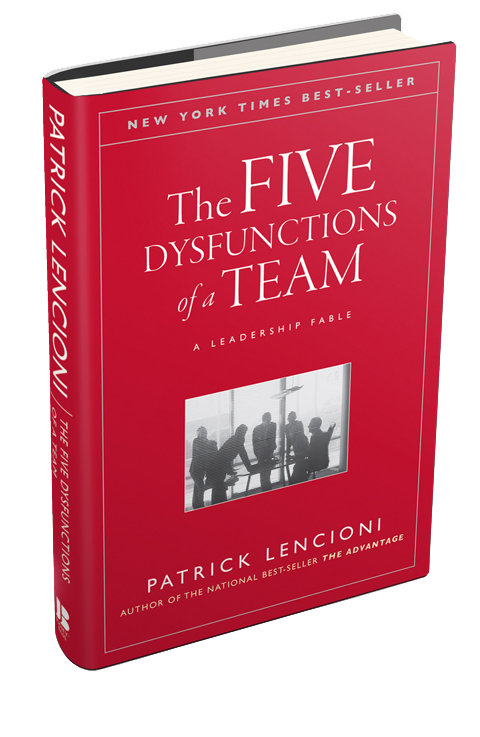
Patrick Lencioni introduced the model in his best-selling book The Five Dysfunctions of a Team. Wiley then adapted Lencioni's model into a research-validated assessment and a personalized profile for each participant.
The model is simple and sound: Trust, Conflict, Commitment, Accountability and Results. A participant does not need a background in psychology to understand it, and can start using it in the next meeting.
IS THIS THE RIGHT PROFILE?
23 pages 36 pages
Using both. Many organizations start with Personal Development to introduce the model to individuals, and follow with Team Development for intact teams.
GOOD TO KNOW
The profile is about the individual. It does not score a team or compare teammates. For a team-level picture, use Team Development.
The Five Behaviors® is a development tool only, never a hiring or selection tool.
Reading the profile builds awareness; changing a habit takes practice with other people. Sessions are sold separately, below.
HOW IT WORKS
Priced per learner. From 10 learners, a lower volume rate applies to every learner in the order. If you administer the program from your own account, each profile uses 25 credits. See volume rates →
Each participant receives an access code and completes the 15–20 minute assessment online, with a secure account the participant can return to.
The 23-page profile is available as soon as the assessment is complete, and can be saved as a PDF.
On its own, with a one-on-one debrief, or in a facilitated workshop where participants practice the behaviors together. This is the step where habits change.
MAKE THE PROFILE STICK
Live, online sessions with a Five Behaviors® Certified Practitioner. Profiles included. From $5,250 per cohort.
One-on-one or group interpretation of the profile, with an action plan.
For an internal facilitator who will run The Five Behaviors® program in-house.

Book a 20-minute intro call with Frank November. Bring your group and your goals, and leave knowing which option fits.
Book a 20-minute intro callSUPPORT AND REFUNDS
Technical support comes from Wiley's dedicated team, available 24 hours a day, every day, by chat, phone and email. Symphony 100 provides the non-technical guidance: profile debriefs, interpretation and program questions.
Assessments and profiles are digital products: access codes go live at checkout and are not refundable once access is issued. The Symphony 100 Guarantee →
$150 per learner · volume rates from 10
Authorized Partner
TEAM DEVELOPMENT
For one intact, ongoing team that has worked together for a while. Looks at the team's collective behavior on all five behaviors.
$210 per team member
SEE IT BEFORE YOU BUY
Open any document in a new tab, download it, or flip through it like a book. All resources →