Three sentences people say in organizations where teamwork is left to chance.
“We nod in the meeting, and then nothing changes.”
“I did my part. The rest is not my problem.”
“Nobody tells me when something is going wrong.”
START HERE
Two parts: a personal profile for each participant, and the live workshop built on the profile
The Five Behaviors® Personal Development is the result of a partnership between Wiley and best-selling author Patrick Lencioni. The program teaches individuals to become better teammates, using the model from Lencioni's book The Five Dysfunctions of a Team. Each participant completes an assessment and receives a personalized profile on how the participant approaches teamwork.
The Workshop Package takes your group through the profile and the model in live, facilitated sessions. Participants do not have to be on the same team. The package suits a mixed group from across the organization, and one cohort can hold up to 25 people.
The Five Behaviors® model, built from the foundation up
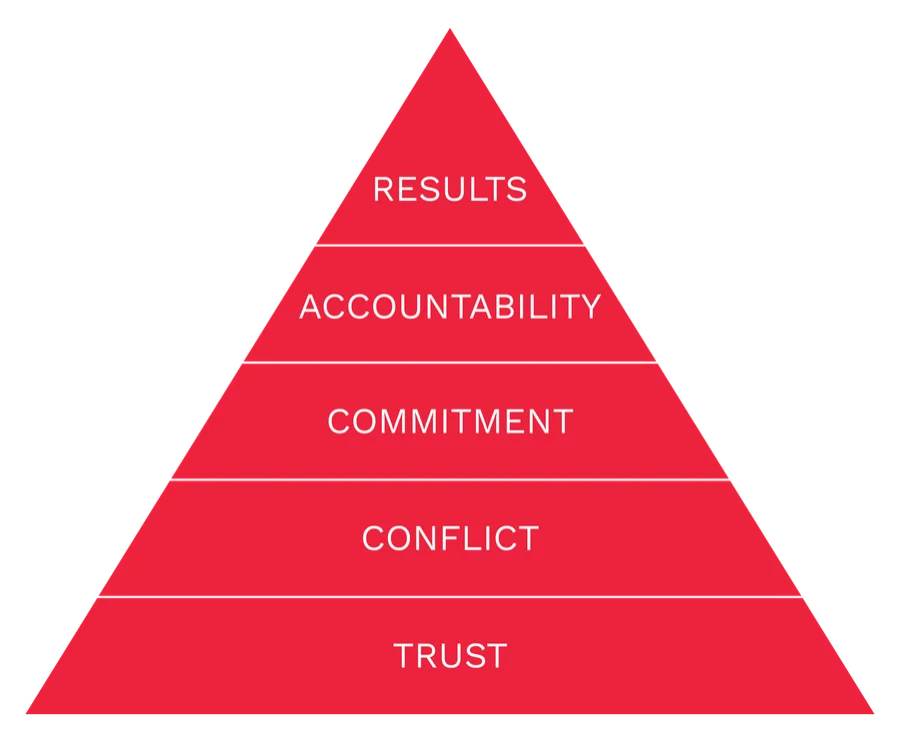
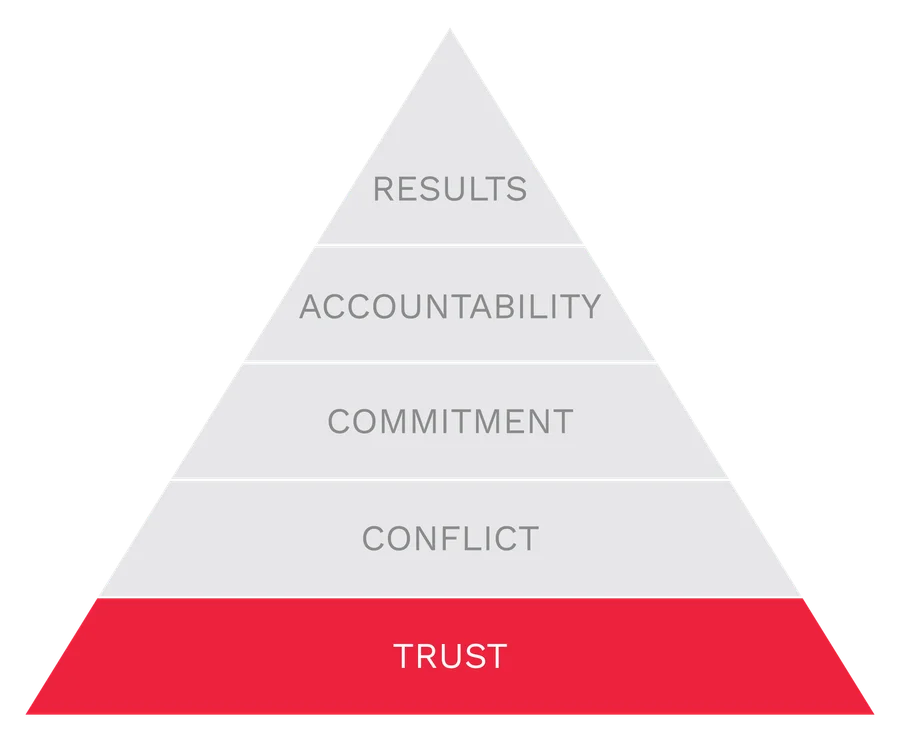
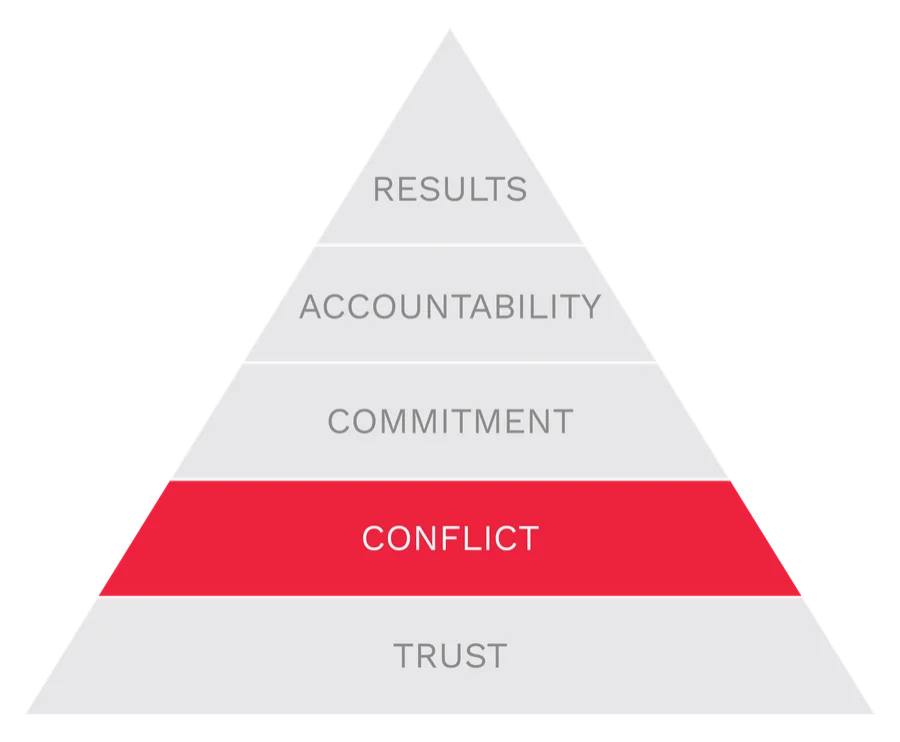
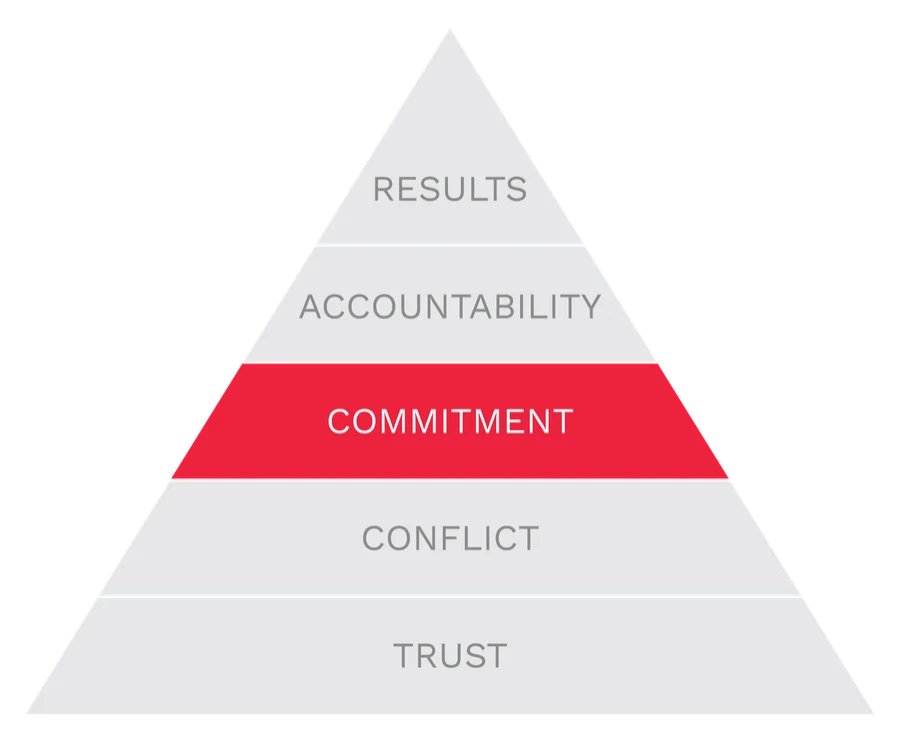
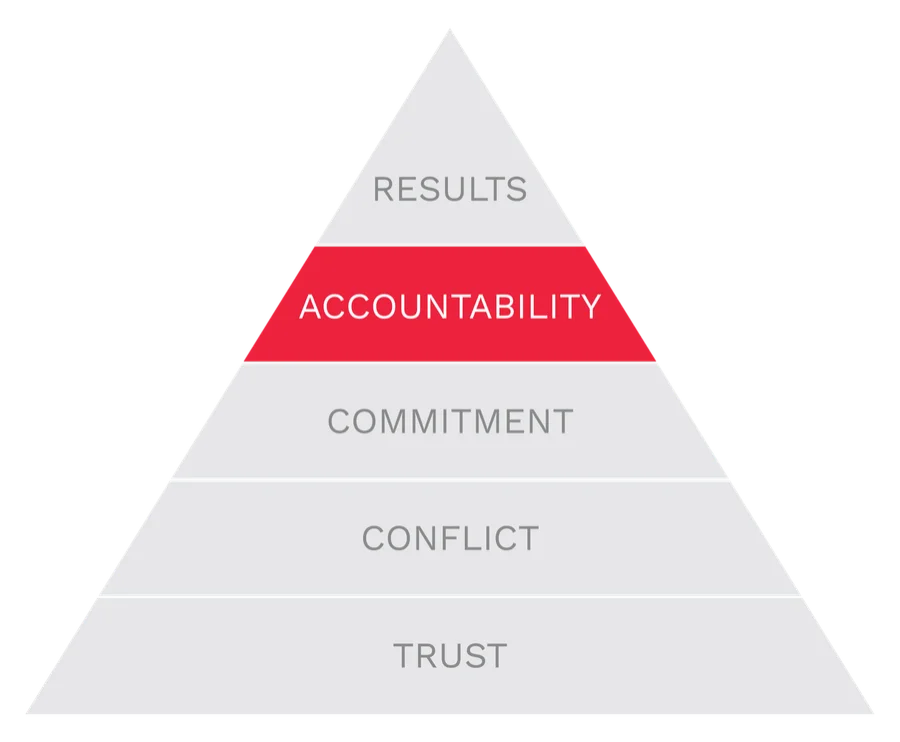
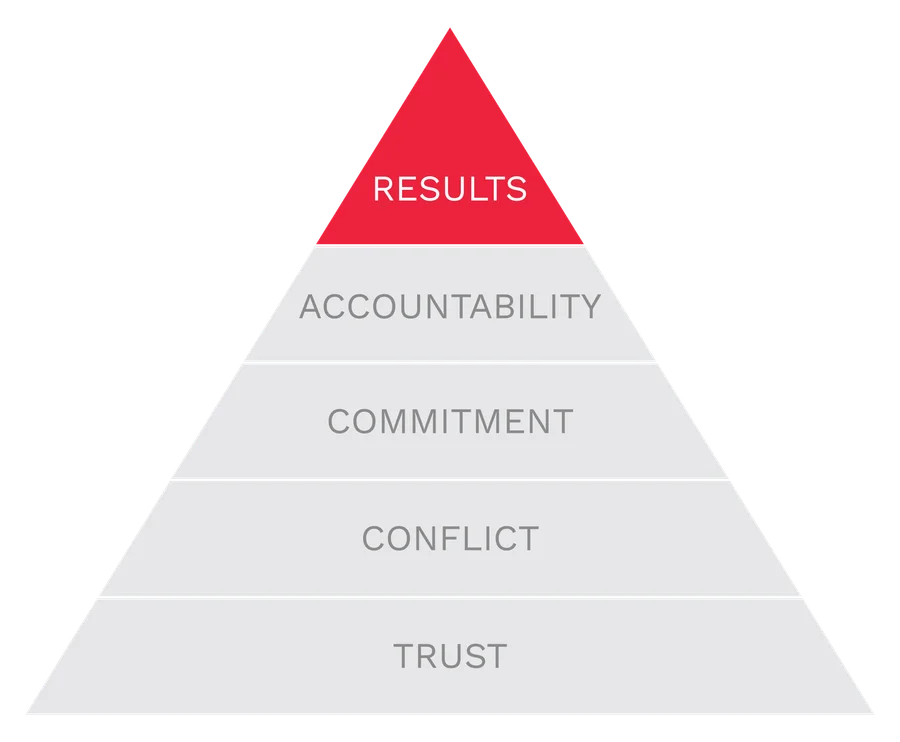
The model is a pyramid. Each behavior is the foundation for the next behavior.
The Five Behaviors® model
Each behavior is the foundation for the next one. Choose a level, or build the model from the base up.
The Five Behaviors® model. Graphics: Wiley.
WATCH
See The Five Behaviors® model explained
An overview of The Five Behaviors® model: trust, conflict, commitment, accountability, and results, and how teams work through them together.
WHO IT IS FOR
Individuals who want to be better teammates, on any team
Most workshop packages need an intact team in the room. The Personal Development Workshop Package does not. Participants work on their own behavior as teammates, so participants can come from different teams, different departments and different levels.
A mixed group from across the organization
Imagine you run learning and development. Twenty people from six departments sign up. Each person works on the person's own teamwork habits, and the group leaves with one shared language.
A whole department
Imagine you head a department of 25 people who sit on several small teams. One cohort covers the department, and every team in the department starts using the same five words.
New hires and new managers
Imagine you bring in a group of new hires each quarter. The workshop shows the new hires what your organization expects of a teammate before habits form.
People who sit on several teams
Imagine you are a specialist who serves four project teams. No single team owns your development, and the profile and the action plan travel with you to every team.
An organization-wide rollout
Imagine you want one culture of teamwork across 200 people. Cohorts of up to 25 run one after another or in parallel.
A first step before Team Development
Imagine your leadership team is not ready for a team intervention. Personal Development introduces the model to individuals first, and The Five Behaviors® Team Development follows for intact teams.
PURPOSE AND KEY OBJECTIVES
What the workshop is for
Organizations book this workshop for a business reason: poor teamwork costs money. Decisions get reopened, work is done twice, problems stay hidden until they are expensive, and good people leave teams that frustrate them.
The purpose of the Workshop Package is to give every participant the self-awareness and the skills to be a better teammate, so more of the organization's time and energy goes into the outcomes it is measured on: productivity, retention and, in the end, profitability.
To get there, by the end of the sessions participants will:
1
Know themselves as teammates
Each participant develops greater self-awareness of the participant's own strengths and challenges as a teammate.
2
Share one language
Participants gain a shared language and framework for discussing and improving teamwork.
3
Practice the skills
Participants practice building trust, engaging in productive conflict, committing to decisions and holding one another accountable.
4
Leave with a plan
Each participant creates a personal action plan and selects habits to develop across the five behaviors.
Your objectives may differ. Symphony 100 discusses these objectives with you up front. If your organization has different priorities, the objectives and the emphasis of the sessions are adjusted to match. Results vary with each organization's culture, participation and follow-through: results disclaimer.
THE BOOK AND THE MODEL
Built on The Five Dysfunctions of a Team
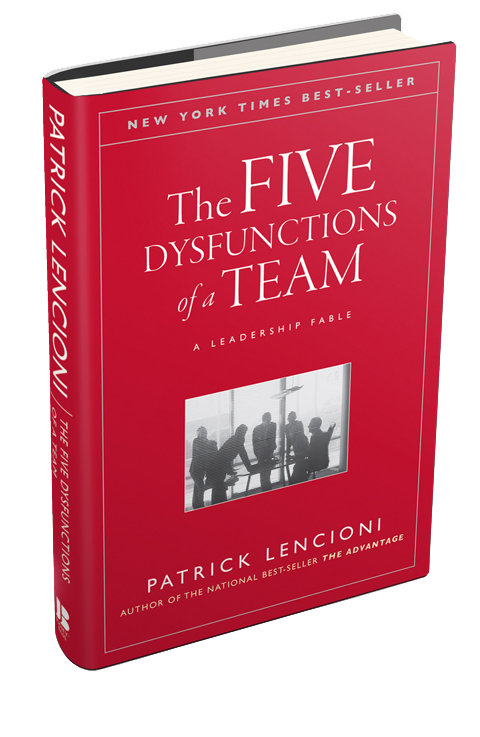
Patrick Lencioni introduced the model in his best-selling book The Five Dysfunctions of a Team. Wiley then adapted Lencioni's model into a scalable training program with a research-validated assessment and a personalized profile for each participant.
The model is simple and sound: Trust, Conflict, Commitment, Accountability and Results. A participant does not need a background in psychology to understand the model, and participants can start using the model in the next meeting they attend.
WHY A WORKSHOP
Why not just hand out the profiles?
Imagine every participant has read the participant's own profile. Each person now knows how that person tends to handle trust and conflict. On Monday the same person sits in the same meetings and behaves the same way, because reading about a habit does not change the habit.
Practice, not only insight. Participants work through exercises and group discussions and try the behaviors with other people.
A shared experience. People from different teams hear how colleagues in other parts of the organization see trust, conflict and accountability.
An experienced facilitator. The facilitator keeps each exercise tied to real work situations.
A plan to take away. Each participant leaves with selected habits and a step-by-step action plan.
Photo: The Five Behaviors®.
WHO FACILITATES
Facilitated by a Five Behaviors® Certified Practitioner
Every Personal Development Workshop Package is facilitated by a Five Behaviors® Certified Practitioner. Frank November, Founder & CEO of Symphony 100, is a Five Behaviors® Certified Practitioner, and so are the other facilitators who deliver this package for Symphony 100. From time to time, a producer assists the facilitator to keep the delivery smooth and professional.
Live, instructor-led sessions on a private Zoom link: four sessions and 5.5 hours in the Standard package, or three sessions and 4.5 hours in the Abbreviated package
The Five Behaviors® Personal Development assessment and profile for every participant
Interactive exercises and group discussions focused on practical application
Insights into personal strengths and areas for growth within each of the five behaviors
A personal action plan for every participant
THE LIVE SESSIONS
Four sessions, from the model to a personal action plan
The Standard package runs as three 90-minute sessions and one 60-minute session, five and a half hours in total, live and online. Each 90-minute session has a short stretch break near the midpoint. The sessions follow Wiley's seven modules: You and The Five Behaviors®, Building Trust, Mastering Conflict, Achieving Commitment, Embracing Accountability, Focusing on Results, and Summary and Action. Choose a session to see the session's topics.
SESSION 1 · 90 MINUTES
The model and Building Trust
Participants learn the model and start with the foundation.
1
Welcome, introductions and expectationsParticipants meet, and the facilitator learns who is in the room and what each participant wants from the workshop.
2
You and The Five Behaviors®A video featuring Patrick Lencioni introduces the model, and participants explore their personalized profiles.
3
Building TrustParticipants explore vulnerability-based trust, identify the barriers to trust, and select one trust-building habit.
4
Mastering Conflict (begin)Participants begin to look at why productive conflict leads to better decisions.
Key outcome. Participants understand the model, see their own tendencies as teammates, and select a trust-building habit.
SESSION 2 · 90 MINUTES
Mastering Conflict
Participants learn to turn disagreement into productive dialogue.
1
Mastering Conflict (continued)Participants use their profiles to understand their own conflict tendencies.
2
Conflict BehaviorsParticipants learn to tell healthy, ideas-based conflict from destructive patterns.
3
Achieving Commitment (begin)Participants look at why commitment requires clarity and buy-in.
Key outcome. Participants know their own conflict tendencies and have strategies for engaging in constructive conflict.
SESSION 3 · 90 MINUTES
Commitment, Accountability and Results
Participants move from debate to decisions, and from decisions to shared standards.
1
Achieving Commitment (continued)In the exercise “Go Get It or Get Over It”, participants explore the balance between voicing concerns and moving forward with a decision.
2
Embracing AccountabilityParticipants reflect on how they give and receive feedback, practice an accountability conversation, and select one habit.
3
Focusing on ResultsParticipants look at how individual priorities can support or detract from the goals of the team.
Key outcome. Participants have practical tools to align with team decisions and the confidence to start an accountability conversation.
SESSION 4 · 60 MINUTES
Results Motivators and the action plan
Participants turn the insights into a plan.
1
Results MotivatorsParticipants reflect on their own motivators and stressors and how each one affects a focus on results.
2
Action planningParticipants revisit the habits they selected and build a step-by-step action plan.
3
SummaryParticipants review the learning journey and commit to next steps.
Key outcome. Each participant leaves with a personal action plan for the habits the participant selected.
Abbreviated package
Three 90-minute sessions, four and a half hours in total, live and online.
Covers the model, Trust, Conflict, Commitment, Accountability, Results, and action planning.
Conflict Behaviors and Results Motivators are not covered.
All sessions are live and online
Every session runs on a private Zoom link, so participants can join from any location.
Polls, breakout rooms and group discussion keep a large group active.
Participants from different sites and time zones can share one cohort.
A guide, not a script. The time spent on each topic varies with the group, so the facilitator adjusts the pace to your participants. Symphony 100 also reviews this syllabus on a regular basis and adjusts the topics and activities to better meet clients' needs, so the outline above is subject to change.
PERSONAL DEVELOPMENT OR TEAM DEVELOPMENT
Which package of The Five Behaviors® fits your group?
Choose Personal Development if…
The participants do not all work on the same team.
You want to introduce the model to a broad audience.
The group is large: up to 25 people in a cohort.
The focus is each person's own strengths and areas for growth as a teammate.
Time is limited and you want a concise program.
Choose Team Development if…
The participants are one intact team that works together regularly.
The team wants to look at the team's own collective behavior.
The team can commit to a program that unfolds over multiple sessions.
The team struggles with trust, conflict or accountability and wants to address those issues together.
Using both. Many organizations start with Personal Development to introduce the model to individuals, and follow with Team Development for intact teams.
HOW IT WORKS
From order to action plan in four steps
1
Order, then a logistics call
Choose the package and the cohort size. The first step after your order is a call with Symphony 100 to go through the logistics: who is taking part, how the assessments go out, and what your organization wants from the workshop.
2
Everyone completes the assessment
Every participant completes The Five Behaviors® Personal Development assessment. Symphony 100 confirms that all the assessments are in before the workshop is scheduled.
3
Schedule the sessions
Once the assessments are complete, Symphony 100 schedules the live sessions with you.
4
Live sessions, then the action plan
Participants work through the five behaviors and leave with a personal action plan and the habits each participant chose.
PRICING
One price per cohort, by package and cohort size
Participants in the cohort
Abbreviated 3 sessions · 4.5 h
Standard 4 sessions · 5.5 h
Up to 10
$5,250
$6,000
11 to 15
$6,500
$7,500
16 to 20
$8,000
$8,750
21 to 25
$9,250
$10,250
Every price includes The Five Behaviors® Personal Development profile for each participant. Prices are in US dollars. Sales tax, where applicable, is calculated at checkout. All sessions are delivered live and online.
Why this package suits larger groups
Most Symphony 100 workshop packages are built around 10 participants. The Personal Development package is different: the work is individual reflection and practice, so one cohort can hold up to 25 participants.
More than 25 people?
Order one package per cohort; several cohorts can run in parallel or one after another. Anything customized is quoted on a call: Coaching, Consulting & Program Services →
Not sure which package fits?
Book a 20-minute intro call with Frank November. Bring your group, your goals, and your timeline, and leave knowing which option fits.
The Five Behaviors® Team Development Workshop is explicitly designed for intact teams striving to build stronger relationships and enhance their effectiveness. Grounded in Patrick Lencioni’s The Five Dysfunctions of a Team model, this workshop takes your…



 A mixed group from across the organization
 A whole department
 New hires and new managers
 People who sit on several teams
 An organization-wide rollout
 A first step before Team Development