Three sentences people say on a team that is working hard and not working together.
“We agree in the room and disagree in the hallway.”
“Nobody says what they really think in our meetings.”
“Everyone protects their own department.”
START HERE
Two parts: a profile of your team, and the live program built on the profile
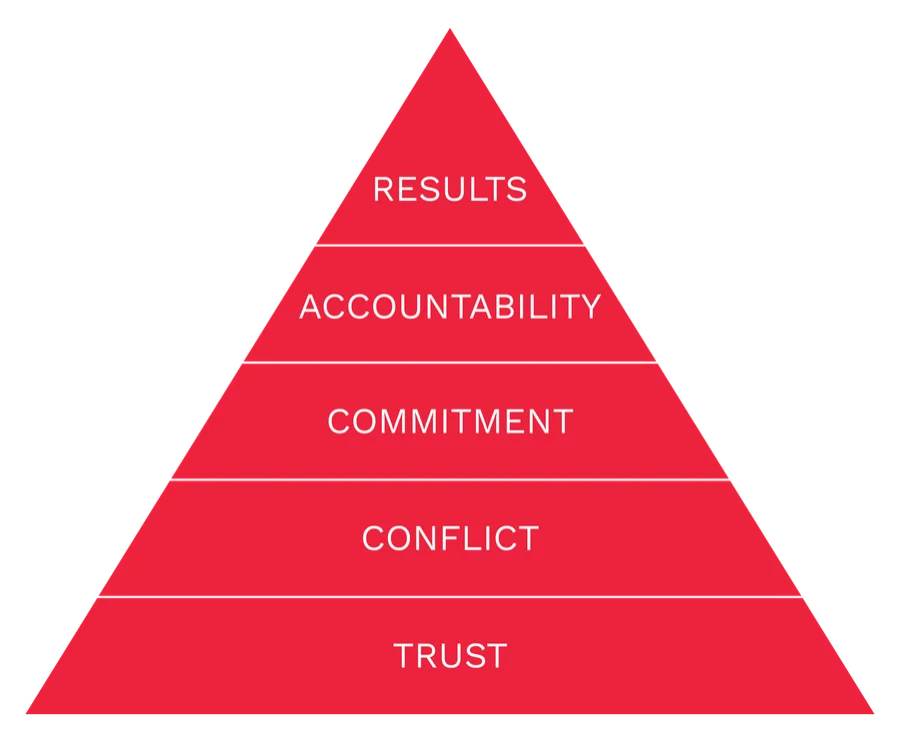
The Five Behaviors® Team Development is based on Patrick Lencioni's book The Five Dysfunctions of a Team. Every member of one intact team completes an assessment, and each team member receives a personalized Team Development profile that shows how the team as a whole is doing on the five behaviors: Trust, Conflict, Commitment, Accountability and Results.
The Team Development Program takes your team through the profile in seven live, facilitated sessions. The team works on the team's own behavior: the real meetings, the real decisions and the real commitments of this team. The team leaves with a team-wide action plan.
The Five Behaviors® model, built from the foundation up
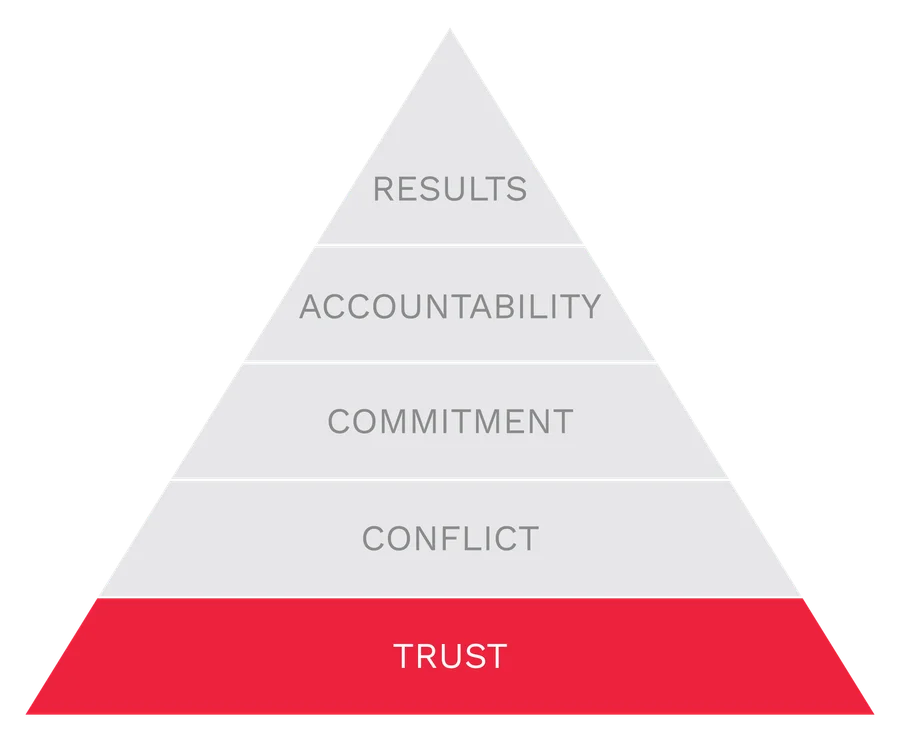
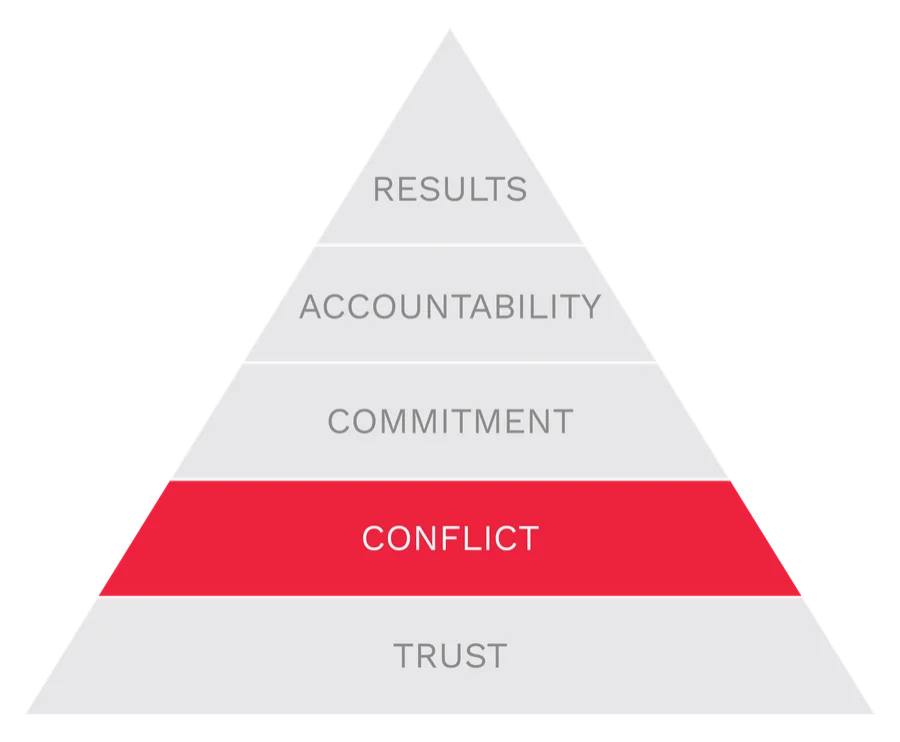
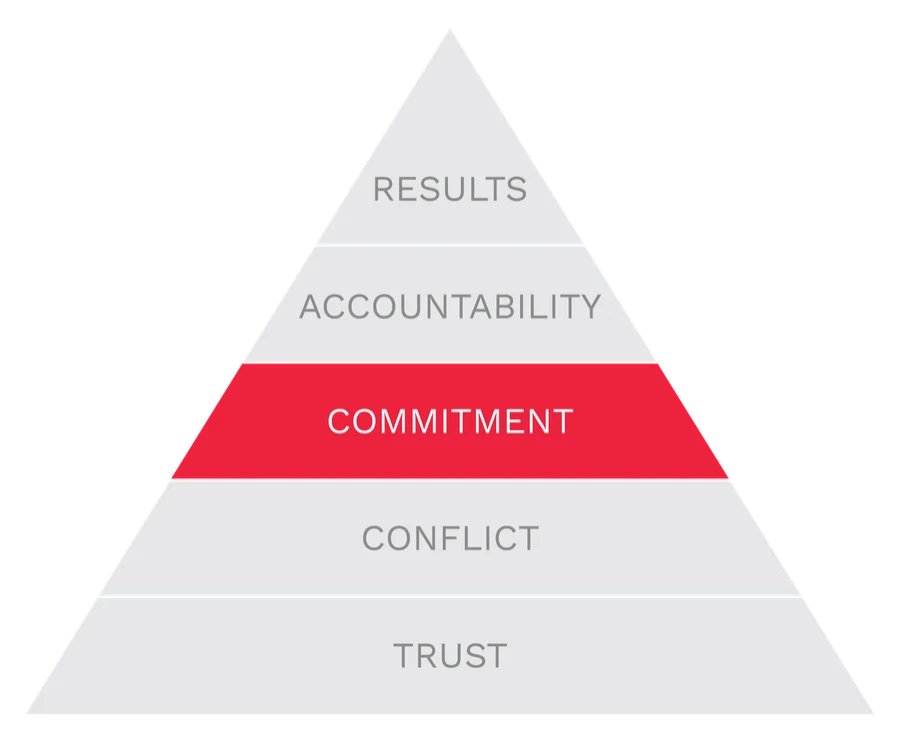
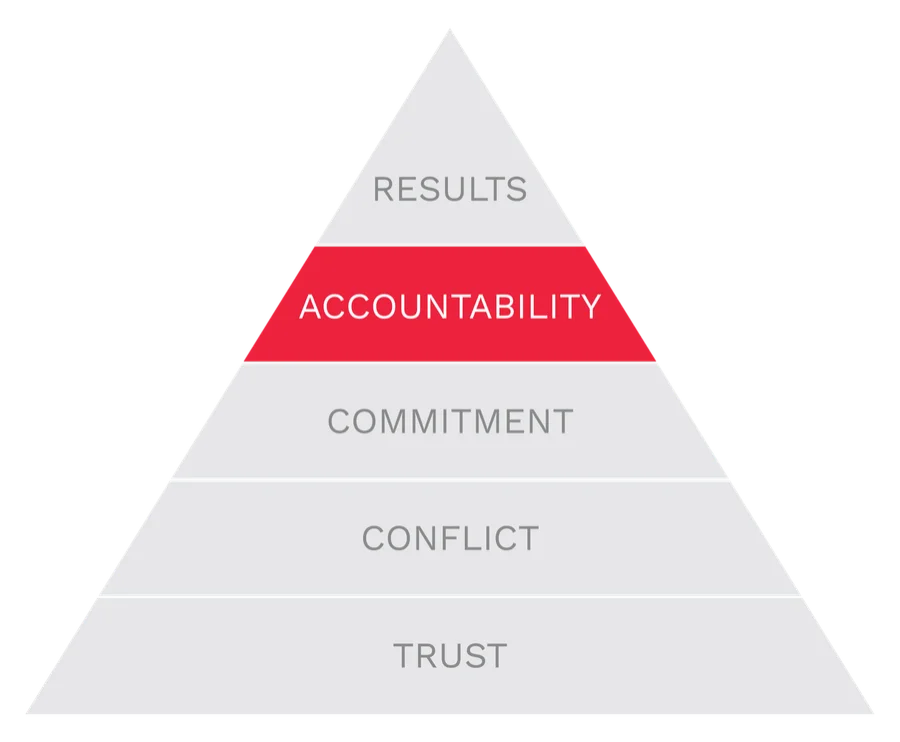
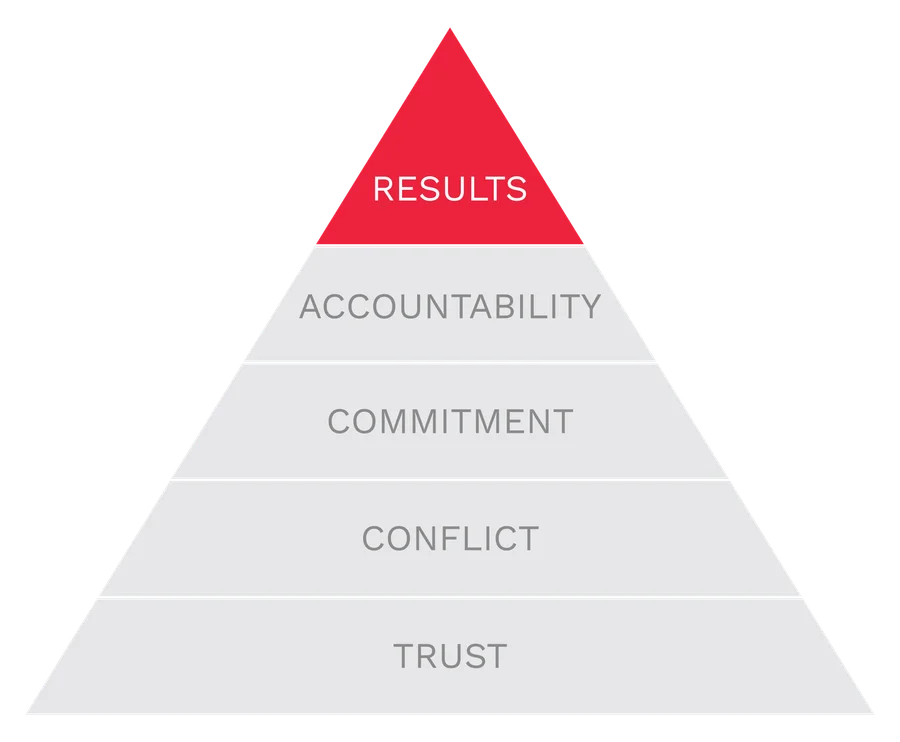
The model is a pyramid. Each behavior is the foundation for the next behavior.
The Five Behaviors® model
Each behavior is the foundation for the next one. Choose a level, or build the model from the base up.
The Five Behaviors® model. Graphics: Wiley.
WATCH
See The Five Behaviors® model explained
An overview of The Five Behaviors® model: trust, conflict, commitment, accountability, and results, and how teams work through them together.
WHO IT IS FOR
One intact team that wants to work better together
Team Development is for an intact team: a group of people who work together regularly, share goals and depend on one another. The whole team takes part, including the leader of the team.
A leadership team
Imagine you are a CEO whose executives each run a strong department and rarely act as one team. The program helps the leadership team strengthen alignment and accountability, and the organization follows the leadership team's example.
An intact team at any level
Imagine you lead a product team of eight people. The team is good and wants to be better. The program deepens trust, improves communication and helps the team achieve lasting results.
A team facing a challenge
Imagine your team has low trust, avoids hard conversations, or does not follow through on decisions. The program gives the team a safe, guided setting to address those issues directly.
A new or newly combined team
Imagine two groups have just merged under one leader. The program gives the new team one language and one set of team norms from the start.
Organizations book this program for a business reason: a team that does not work as a team costs money. Decisions are reopened, problems stay hidden, priorities compete, and capable people leave a team that frustrates them.
The purpose of the Team Development Program is to help your team become a cohesive team, so more of the team's time and energy goes into the outcomes the team is measured on: productivity, retention and, in the end, profitability.
To get there, by the end of the program the team will:
1
Build trust
Build a foundation of vulnerability-based trust.
2
Use conflict well
Engage in productive conflict around ideas and decisions.
3
Commit
Align around key decisions with clarity and buy-in.
4
Hold one another accountable
Strengthen collective accountability for shared objectives.
5
Focus on results
Agree a team-wide action plan and put team results first.
Your objectives may differ. Symphony 100 discusses these objectives with you up front. If your team has different priorities, the objectives and the emphasis of the sessions are adjusted to match. Results vary with each team's culture, participation and follow-through: results disclaimer.
THE BOOK AND THE MODEL
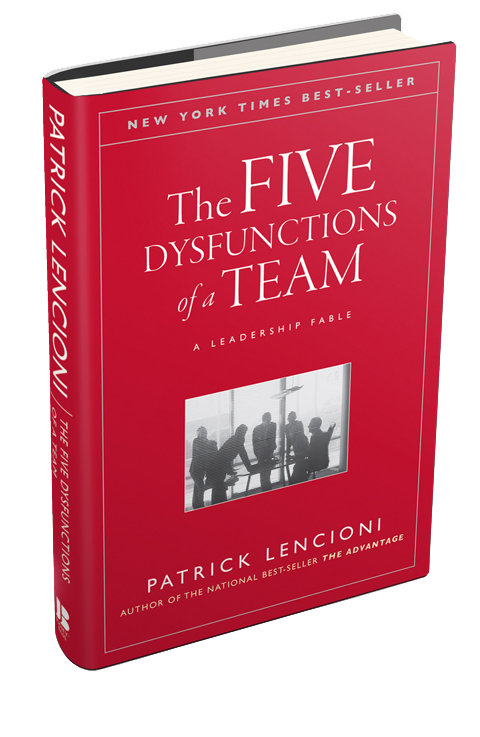
Built on The Five Dysfunctions of a Team
Patrick Lencioni introduced the model in his best-selling book The Five Dysfunctions of a Team. Wiley then adapted Lencioni's model into a training program with a research-validated assessment and a personalized profile.
The model is simple and sound: Trust, Conflict, Commitment, Accountability and Results. A team does not need a background in psychology to understand the model, and a team can start using the model in the team's next meeting.
WHY A FACILITATED PROGRAM
Why not just read the team profile together?
Imagine your team has read the profile. The scores show low trust and little healthy conflict. Now someone has to say the uncomfortable sentence out loud, and the person who usually runs the meeting is part of the pattern.
A facilitator from outside the team. The leader of the team takes part as a team member, and the facilitator holds the conversation.
A safe, guided setting. Structured activities, such as Personal Histories, let team members take small risks before larger risks.
The team's real work. The team applies each behavior to the team's own meetings, decisions and commitments.
Time between sessions. The team tries each behavior at work and reports back at the next session.
Photo: The Five Behaviors®.
WHO FACILITATES
Facilitated by a Five Behaviors® Certified Practitioner
Frank November, Founder & CEO of Symphony 100 and a Five Behaviors® Certified Practitioner, facilitates the Team Development Program. From time to time, a producer assists the facilitator to keep the delivery smooth and professional.
Seven live, instructor-led sessions of 90 minutes each on a private Zoom link
The Five Behaviors® Team Development assessment and profile for every team member, with the results of the team as a whole
Team exercises and facilitated discussions that apply the model to the team's own dynamics and challenges
Insights into the team's strengths and challenges in Trust, Conflict, Commitment, Accountability and Results
Action-planning time and a team-wide action plan
THE SEVEN LIVE SESSIONS
Seven sessions, from the model to a team action plan
The program runs as seven 90-minute sessions, ten and a half hours in total, live and online. Organizations that keep meetings to an hour can choose weekly 60-minute sessions instead. Each 90-minute session has a short stretch break near the midpoint. Choose a session to see the session's topics.
SESSION 1 · 90 MINUTES
Kickoff and the model
The team sets expectations and meets the model.
1
The Five Behaviors® modelA video featuring Patrick Lencioni introduces the model.
2
Expectations and team goalsThe team agrees what the team wants from the program.
3
The assessment resultsThe team takes a first look at the team profile.
Key outcome. The team understands the model, the purpose of the program, and each member's role in building a cohesive team.
SESSION 2 · 90 MINUTES
Building Trust
The team lays the foundation with vulnerability-based trust.
1
Vulnerability-based trustWhat vulnerability-based trust means and why trust drives team cohesion.
2
Personal HistoriesA structured activity in which team members learn about one another.
3
DiSC® foundationsTeam members learn one another's DiSC® styles for a deeper understanding of the team.
Key outcome. The team names the barriers to trust on this team and selects one trust-building practice.
SESSION 3 · 90 MINUTES
Mastering Conflict
The team turns disagreement into productive dialogue.
1
Healthy and unhealthy conflictThe team learns the difference between the two kinds of conflict behavior.
2
The team's conflict tendenciesTeam members use their DiSC® styles to see how each person approaches conflict.
3
Ideas-based conflictThe team practices strategies for productive conflict.
Key outcome. The team shares one understanding of how conflict affects the team and has practical tools for constructive conflict.
SESSION 4 · 90 MINUTES
Achieving Commitment
The team moves from debate to decisions.
1
Goals and prioritiesThe team clarifies the goals and priorities of the team.
2
Barriers to commitmentIn the exercise “Go Get It or Get Over It”, the team balances voicing concerns with moving forward.
Key outcome. The team has techniques for gaining clarity and buy-in, even when opinions differ.
SESSION 5 · 90 MINUTES
Embracing Accountability
Team members hold themselves and one another to high standards.
1
Team accountability normsThe team sets the standards team members will hold one another to.
2
Peer-to-peer conversationsTeam members practice accountability conversations in role-play.
Key outcome. Team members can give and receive feedback and can start an accountability conversation with confidence.
SESSION 6 · 90 MINUTES
Focusing on Results
The team aligns individual motivations with team goals.
1
Individual and team prioritiesThe team looks at how personal priorities support or detract from team goals.
2
DistractionsThe team identifies distractions and agrees strategies to stay focused on results.
Key outcome. The team recognizes what pulls attention away from collective results and commits to shared objectives.
SESSION 7 · 90 MINUTES
Action planning
The team turns the insights into a plan.
1
The team action planThe team finalizes the plan for the growth of the team.
2
Learnings and commitmentsThe team reviews the key learnings and the commitments each member made.
Key outcome. The team leaves with a team-wide action plan and personal steps for each member.
Weekly 90-minute sessions, live and online
The seven sessions are spread over 8 to 12 weeks.
The team applies each behavior at work between sessions and reports back.
The pace suits teams that balance the program with ongoing work.
Weekly 60-minute sessions, live and online
The same program for organizations that keep meetings to an hour.
The topics are spread across shorter weekly sessions, and your quote sets the number of sessions.
Choose 60-minute sessions on the quote form.
A guide, not a script. The time spent on each topic varies with the team, so the facilitator adjusts the pace to your team. Symphony 100 also reviews this syllabus on a regular basis and adjusts the topics and activities to better meet clients' needs, so the outline above is subject to change.
TEAM DEVELOPMENT OR PERSONAL DEVELOPMENT
Which program of The Five Behaviors® fits your group?
Choose Team Development if…
The participants are one intact team that works together regularly.
The team wants to look at the team's own collective behavior.
The team can commit to a program that unfolds over multiple sessions.
The team struggles with trust, conflict or accountability and wants to address those issues together.
Choose Personal Development if…
The participants do not all work on the same team.
You want to introduce the model to a broad audience.
Using both. Many organizations start with Personal Development to introduce the model to individuals, and follow with Team Development for intact teams.
HOW IT WORKS
From first call to team action plan in four steps
1
A call, then your order
The first step is a call with Symphony 100 to confirm that Team Development fits your team, and to go through the logistics: who is on the team, how the assessments go out, and what your team wants from the program.
2
Every team member completes the assessment
Every member of the team completes The Five Behaviors® Team Development assessment. Symphony 100 confirms that all the assessments are in before the sessions are scheduled.
3
Schedule the sessions
Once the assessments are complete, Symphony 100 schedules the seven live sessions with you.
4
Seven live sessions, then the team action plan
The team works through the five behaviors and leaves with a team-wide action plan and the commitments each member made.
PRICING
A quote built for your team
The Five Behaviors® Team Development Program One intact team of up to 10: seven live online sessions and a Team Development profile for every team member
Quoted for your team
Extra team members Add up to 2 more people, for a team of a dozen
Included in your quote
60-minute sessions The same program in weekly sessions of one hour
Quoted for your team
Quotes are in US dollars. Sales tax, where applicable, is added to your quote.
Why the team stays small
The program is built around one team of up to 10 members, with the option of adding 2 more for a dozen. Twelve is the breaking point: beyond a dozen, the quality of the discussion drops, and every member of a team needs to be heard.
Based on Patrick Lencioni’s The Five Dysfunctions of a Team, this workshop takes one cohort through trust, conflict, commitment, accountability, and results, with a profile for every participant.
From $5,250 per cohort · by package type and cohort size



 A leadership team
 An intact team at any level
 A team facing a challenge
 A new or newly combined team



 Authorized Partner