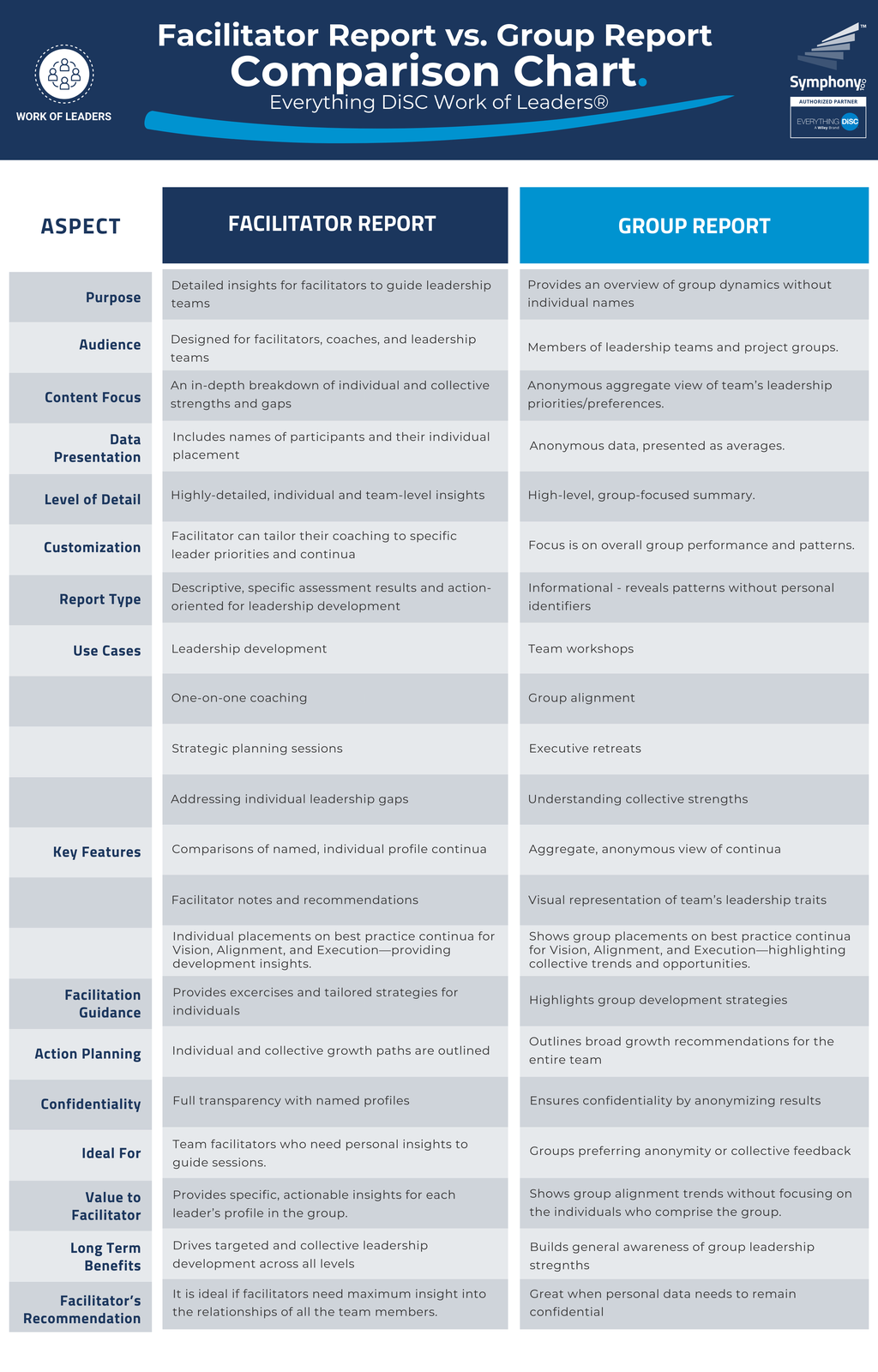
This section of the report highlights specific areas of imbalance in Vision, Alignment, and Execution, providing facilitators with a clear map of where teams may be failing.
For example, a leadership group might excel at crafting bold, ambitious visions but struggle to drive follow-through and accountability in the execution phase. Alternatively, teams may show strong alignment but lack the initiative to move ideas from concept to completion. If left unaddressed, these imbalances can derail even the most talented teams.
By providing granular insights into these leadership tendencies, facilitators can design customized exercises and action plans. This might include:
- Scenario-based problem-solving to enhance execution for high-vision teams.
- Role-play to simulate alignment challenges and improve leaders' communication strategies.
- Action mapping segments long-term goals into smaller, achievable milestones to maintain momentum.
These exercises move teams beyond theoretical leadership concepts, fostering practical skills that leaders can immediately apply.
Adapting in Real-Time to Drive Results
While the structural elements of the reports are standardized, facilitators play a crucial role in interpreting insights to match the dynamics of each team. By analyzing key data points, facilitators can prioritize certain areas, adjusting workshop flow or focus to meet participants' immediate needs. This flexibility allows facilitators to steer discussions toward areas of misalignment, drive deeper engagement, and ensure that the most pressing leadership gaps are addressed first.
For example, facilitators might extend exercises centered on visionary thinking if the team scores heavily in execution but lacks innovation. Alternatively, for teams excelling in vision but struggling with follow-through, facilitators can shift emphasis to alignment and accountability frameworks that ensure ideas turn into action.
This adaptability transforms a static report into a dynamic tool for real-time leadership development, ensuring workshops remain relevant, engaging, and results-driven.
Data-based Insights to Address Unexpected Challenges
Even high-performing leadership teams have challenges—often in areas they least expect. The Facilitator Report exposes these challenges in a constructive, data-driven manner, offering pathways to strengthen weaker areas without diminishing the team’s existing strengths. This ensures that development feels balanced and empowering rather than corrective.
Without addressing these gaps:
- Teams may stagnate, recycling the same ideas without forward movement.
- Over-reliance on strengths can leave leadership areas underdeveloped.
- Organizational momentum suffers when leaders fail to execute strategy.
Empowering Teams Through Proactive Guidance
A key value of this report is the ability to course-correct before minor issues become systemic problems. By targeting development efforts to areas of imbalance, facilitators help teams unlock new levels of productivity, cohesion, and strategic clarity.
Consider a leadership team that excels at generating new ideas (Vision) but lacks follow-through (Execution). Without intervention, projects may pile up with very little forward motion. Facilitators can introduce accountability frameworks or collaborative sprint planning to foster more vigorous execution habits. In doing so, leaders begin to see immediate results, reinforcing new behaviors that stick long after the session ends.
The result is more than improved team performance. It’s cultural change, where leaders at every level learn to balance strategic vision with operational discipline, fostering a leadership approach that consistently drives results across the organization.













































 LEADERS